On a crowded cosmetics aisle, shoppers move fast. They scan dozens of lipsticks, serums, and eyeshadows in seconds. The boxes that stop them are the ones that let them see the product itself—its exact shade, texture, or fill level—without opening the package. That moment of visibility often decides whether they pick it up or keep walking.
Custom packaging boxes for cosmetics that combine clear windows with thoughtful inserts turn passive browsing into active interest. They reduce uncertainty, build confidence, and raise the chance that a product leaves the shelf. For beauty brands competing in retail and e-commerce, these features are no longer optional extras. They are practical tools that improve shelf conversion.
This guide explains exactly how custom cosmetic boxes with windows and inserts work, which combinations deliver the strongest results, and how to specify them without overcomplicating production or budget.
Why Shelf Conversion Matters for Cosmetic Brands
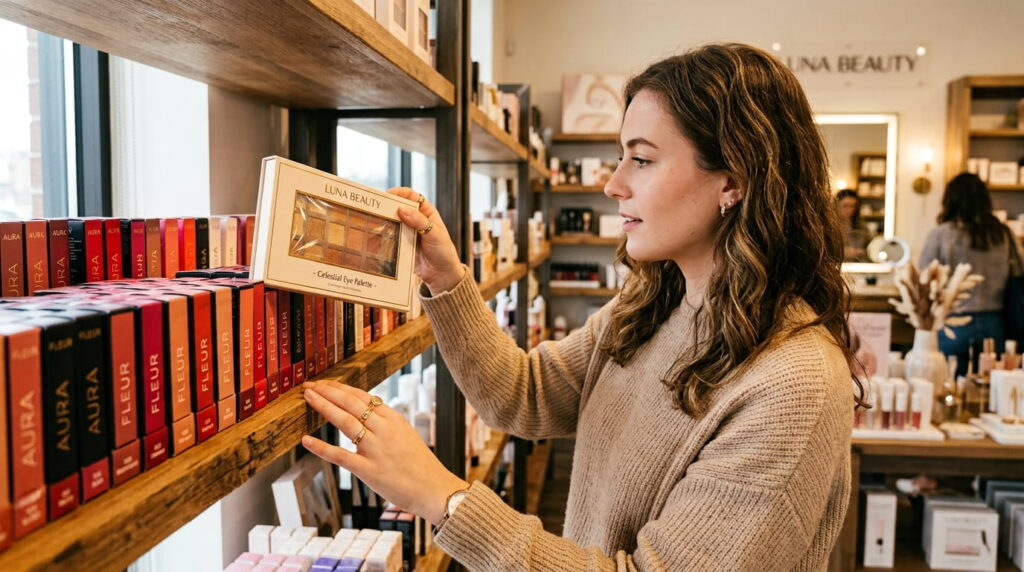
Shelf conversion is the rate at which people who see your product decide to buy it. In cosmetics, several factors work against that decision. Shoppers worry about shade accuracy. They want to judge texture or packaging quality. They hesitate when they cannot see the actual item.
Opaque boxes force customers to rely only on printed claims and photos. That creates friction. Window boxes remove part of that friction by showing the real product. Inserts keep the product perfectly positioned so the view through the window stays consistent and professional. Together they lower hesitation and increase the likelihood of a purchase.
These benefits appear both in physical retail and in online unboxing content. A well-designed window box photographs cleanly for social media and e-commerce listings. A secure insert protects the product during shipping and creates a polished reveal that encourages positive reviews. For brands selling through beauty retailers, boutiques, or direct-to-consumer channels, the combination supports stronger sell-through and fewer returns caused by mismatched expectations.
How Custom Cosmetic Boxes with Windows Drive Visibility and Trust
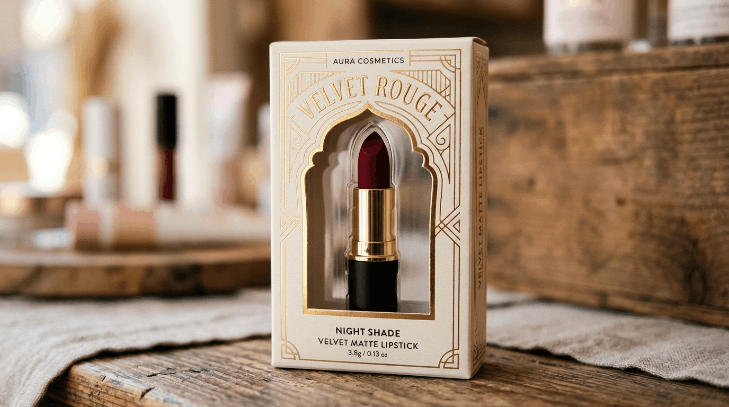
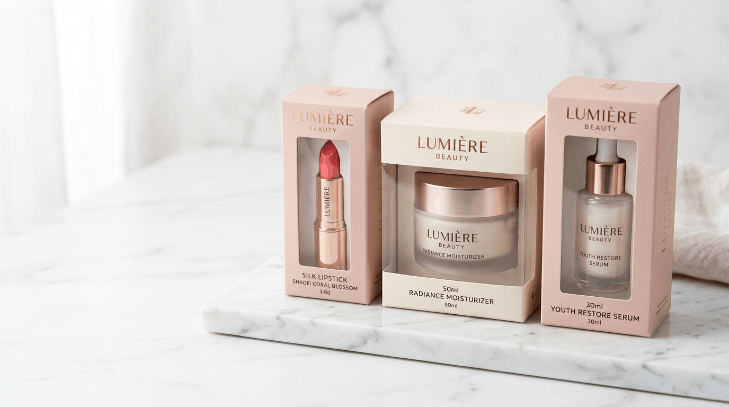
Custom cosmetic boxes with windows feature die-cut openings, usually backed by clear PVC or PET film. The film protects the product from dust and handling while allowing shoppers to see color, texture, and design details.
The primary conversion advantages are straightforward:
- Instant product visibility removes guesswork about shade or appearance.
- Shoppers gain confidence without breaking seals or opening the package.
- The box stands out on crowded shelves because the product itself becomes part of the visual appeal.
- Expectation mismatches drop, which lowers return rates.
Window placement and shape matter. For lipsticks and color cosmetics, a front-panel window that frames the bullet or pan works best. For jars and bottles, a larger opening that shows the product and label helps. Custom shapes can reinforce brand identity, but the window should never compromise structural strength or hide essential branding and regulatory information.
Material choice affects both appearance and performance. SBS cardstock in the 12–24 pt range offers a smooth printing surface and enough rigidity for most retail cosmetic cartons. The window film must stay clear and resist scratching so the product remains attractive under bright store lighting. Larger windows require careful engineering so the box still stacks safely and holds its shape.
Packaging Hive produces custom cosmetic boxes with windows on tuck-end cartons, folding cartons, and rigid styles. Clear PVC windows are available, and the design team helps position openings so they showcase the product without weakening the structure. Free design support and digital mockups let brands test different window sizes and placements before production begins.
The Critical Role of Custom Inserts in Cosmetic Packaging
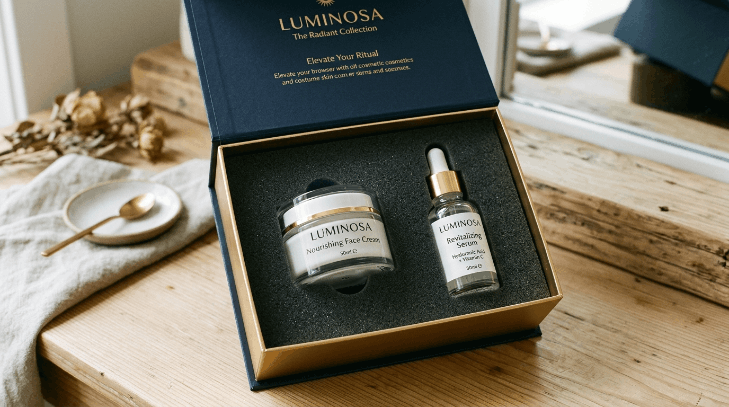
Windows create the view. Inserts make that view reliable and elevate the overall presentation.
Custom inserts—foam, EVA, die-cut cardboard, molded pulp, or paperboard trays—hold products securely in place. They prevent shifting during shipping and on the shelf. When a customer looks through a window or opens the box, the product sits exactly where it should, centered and intentional rather than loose or tilted.
For conversion, inserts deliver three practical benefits:
- Protection reduces damage claims and returns.
- Consistent positioning keeps every unit looking identical through the window.
- Polished presentation raises perceived quality, especially for multi-item sets or premium lines.
Different insert types suit different cosmetics. Die-cut cardboard works well for cost-effective retail lipsticks or tubes. Foam or EVA inserts protect glass jars, serums, and fragile components while adding a premium feel. Partitioned trays organize kits so each item is visible and secure. The right insert turns a simple box into a complete protective and display system.
When windows and inserts are designed together, the product stays perfectly framed. The customer sees a clean, professional presentation every time. That consistency builds trust faster than printed graphics alone.
Packaging Hive offers custom foam, cardboard, and die-cut inserts as part of its cosmetic packaging solutions. These can be engineered to fit specific product dimensions, and there are no extra die or plate charges. The same free design support used for the outer box extends to insert layout.
Combining Windows and Inserts for Maximum Shelf Conversion
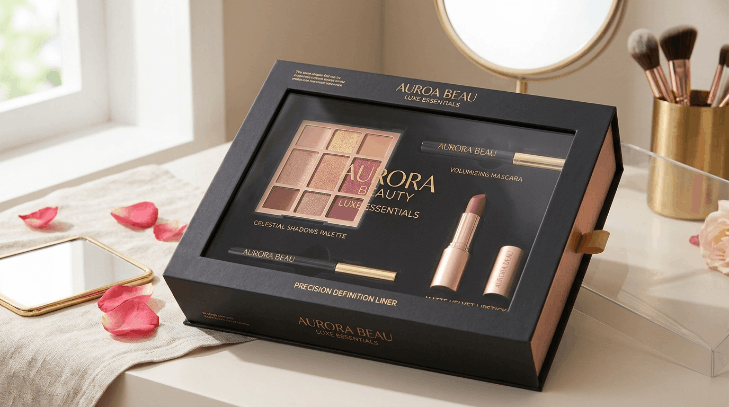
The strongest results come when windows and inserts work as a system rather than separate features.
Lipsticks and color cosmetics
A front window that reveals the exact shade paired with a simple cardboard or foam holder that keeps the tube upright and centered. Shoppers can confirm the color instantly and feel confident the product has been handled carefully.
Skincare jars and serums
A larger window that shows the jar, label, and product fill level combined with a foam insert that cradles the container. The view builds trust in quality and quantity while the insert protects against breakage.
Makeup sets and multi-product kits
One well-placed window or a series of smaller openings paired with partitioned inserts. Each component stays visible and organized, turning the box into a ready-to-display presentation.
Mascara, eyeliner, and slender tubes
Smaller strategic windows with lightweight cardboard supports. Visibility is maintained without overcomplicating the structure or raising costs unnecessarily.
Design guidelines that improve conversion:
- Orient the product so the most appealing side faces the window.
- Match interior colors or tray finishes to the brand palette so the view feels intentional.
- Keep branding and required text clear of the window area.
- Test stacking strength when windows are large.
The modest added cost of a window film and a simple insert is usually offset by higher pickup rates and fewer returns. For many beauty brands, the combination pays for itself through improved sell-through.
Practical Design and Production Tips for Cosmetic Window Boxes
Begin with the product and the retail environment. Measure the exact dimensions of the filled primary package. Decide whether the box will primarily sit on a shelf, a counter, or ship direct to consumers. These factors determine board thickness, window size, and insert style.
Recommended materials for most custom packaging boxes for cosmetics include SBS cardstock for retail folding cartons and heavier board for premium rigid styles. Printing can include full-color branding, soft-touch or matte finishes, and selective foil or spot UV that complements rather than competes with the product view.
Common pitfalls to avoid:
- Windows so large that the box loses structural integrity under stacking weight.
- Inserts that push the product out of the optimal viewing angle.
- Designs that hide the brand name or key claims behind the window film.
- Ignoring how the box will look under bright retail lighting or in e-commerce photography.
Sustainability considerations are increasingly important. Recyclable board options and carefully chosen window films allow brands to maintain eco-claims while still delivering visibility.
Packaging Hive simplifies the process. Minimum order quantities start at 100 boxes. Free graphic design support includes 2D dielines and 3D mockups so you can review window placement and insert fit before production. There are no die or plate charges, and free standard shipping applies across the United States and Canada. Transparent quoting makes it easy to compare options.
Measuring Success and Real Impact
Brands that introduce well-designed custom cosmetic boxes with windows and inserts typically notice higher engagement at the shelf and more positive feedback from retailers. Shoppers spend longer examining the product. Shade-related returns often decline because customers could see the actual color before purchase. Unboxing content improves because the interior presentation looks intentional.
These outcomes support broader goals: stronger brand perception, better sell-through rates, and packaging that works as a silent salesperson both in stores and online.
Conclusion: Turn Visibility into Conversion
Custom packaging boxes for cosmetics succeed when they remove barriers between the shopper and the product. Windows deliver that visibility. Inserts deliver security and polished presentation. Together they increase the likelihood that a product is picked up, examined, and purchased.
The most effective custom cosmetic boxes with windows are those designed as complete systems—outer structure, clear opening, and supporting insert all working together. When executed well, the packaging does more than protect. It sells.
If you are ready to create custom packaging boxes for cosmetics that improve shelf conversion, Packaging Hive can help. Order custom cosmetic boxes with windows and inserts starting at just 100 units. Enjoy free design support, free shipping, and no die or plate charges. Request your free quote today and give your beauty products the visibility and protection they need to perform on the shelf.