
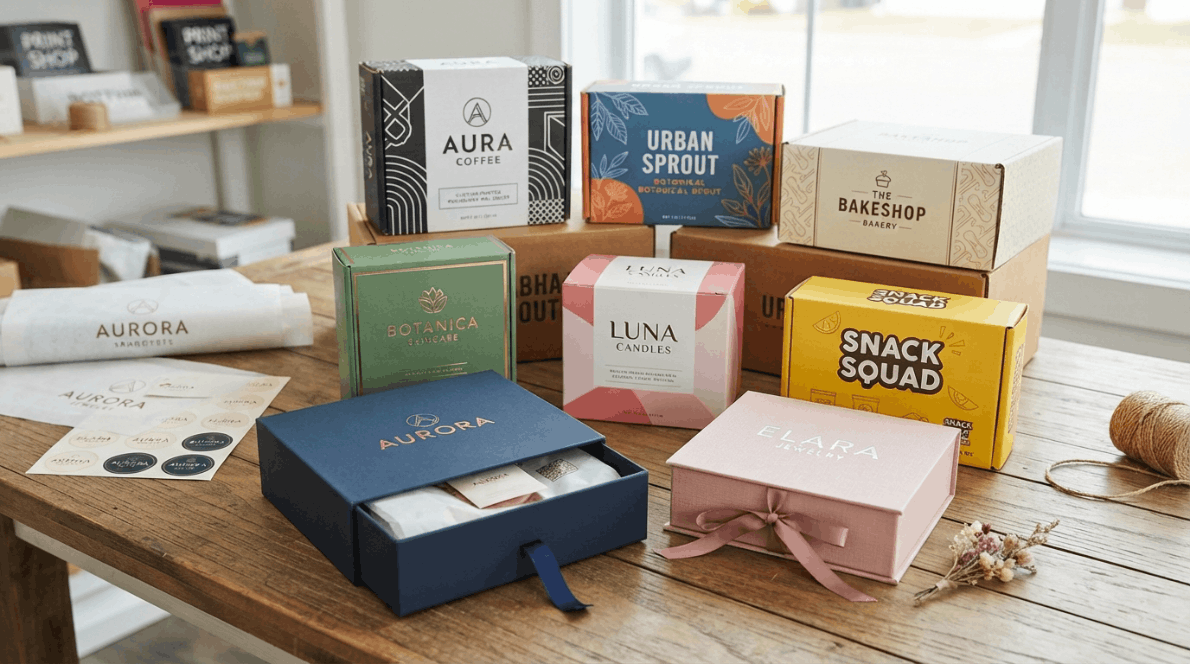
A growing brand’s first big order often arrives in a plain brown box. The product is protected, but the unboxing feels forgettable. Customers open it, use the item, and move on—with almost no lasting impression of your brand. Meanwhile, competitors with thoughtful custom packaging create moments that get shared on social media, encourage reviews, and turn one-time buyers into loyal customers.
Custom packaging boxes solve this gap. They protect products during transit, reinforce brand identity at every touchpoint, and scale with your business—from the first 100-unit test run to consistent monthly volume. Whether you need custom printed boxes for retail shelves or durable custom shipping boxes for e-commerce, the right packaging becomes a growth tool rather than just a cost.
This guide covers everything growing brands need: the main types of custom packaging boxes, materials and finishes that work, how to design effectively, cost considerations, the ordering process, sustainability options, and common pitfalls to avoid. By the end, you will know how to choose and order packaging that matches your current stage and supports the next one.
Why Custom Packaging Boxes Matter for Growing Brands
Packaging is the first physical interaction most customers have with your brand after the online purchase. Generic boxes protect the product but do little else. Custom packaging boxes deliver four practical advantages that compound as you scale.
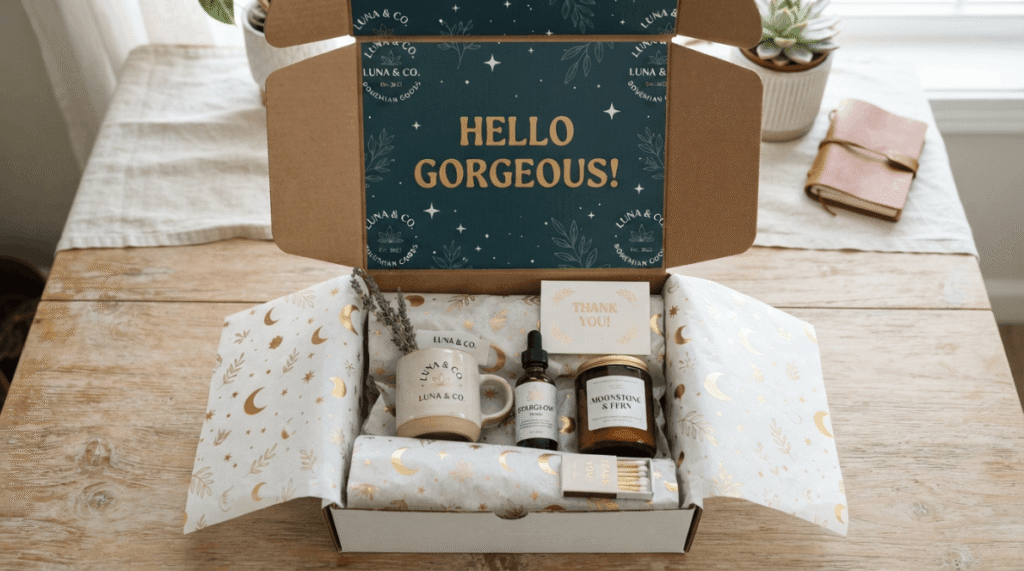
First, they differentiate you in crowded markets. On retail shelves or in an Instagram unboxing video, a well-designed custom box signals professionalism and care. Second, they reduce damage and returns. Right-sized custom shipping boxes with proper inserts lower the chance of crushed or broken products, which protects margins and customer satisfaction. Third, they act as ongoing marketing. Logos, brand colors, short messages, and QR codes on the box or inserts drive reviews, social shares, reorders, and brand recall long after delivery. Fourth, they improve operations. Consistent custom boxes reduce the need for stickers, tape, and excess filler, speeding up fulfillment as volume grows.
Industry observations consistently show that memorable unboxing experiences increase the likelihood of repeat purchases and organic sharing. For growing brands, this means packaging is not optional decoration—it is a measurable lever for retention and acquisition.
Types of Custom Packaging Boxes Every Growing Brand Should Know
Choosing the right structure starts with how and where the product will be used or shipped.
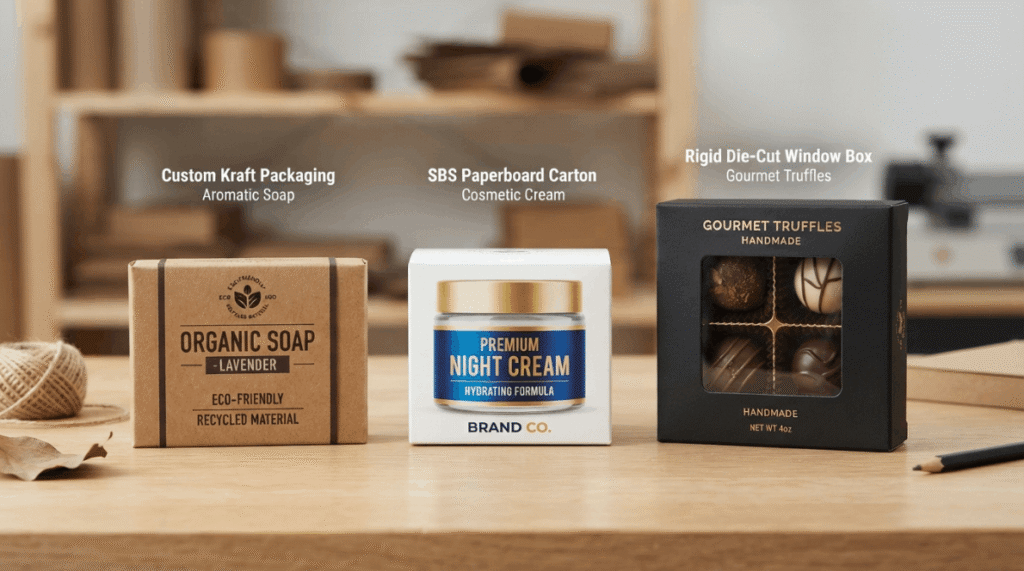
Custom mailer boxes and custom shipping boxes are the workhorses of e-commerce and subscription brands. Made from corrugated board (typically E-flute or B-flute), they are self-locking, strong enough for carrier handling, and highly brandable on the exterior and interior. They work well for kits, apparel, beauty sets, and most direct-to-consumer shipments.
Tuck-top folding cartons are lighter paperboard boxes with straight-tuck or reverse-tuck closures. They are ideal for cosmetics, candles, food items, soaps, and retail products that need strong shelf presence. These are often the first step up from plain shipping boxes when a brand wants retail-ready presentation.
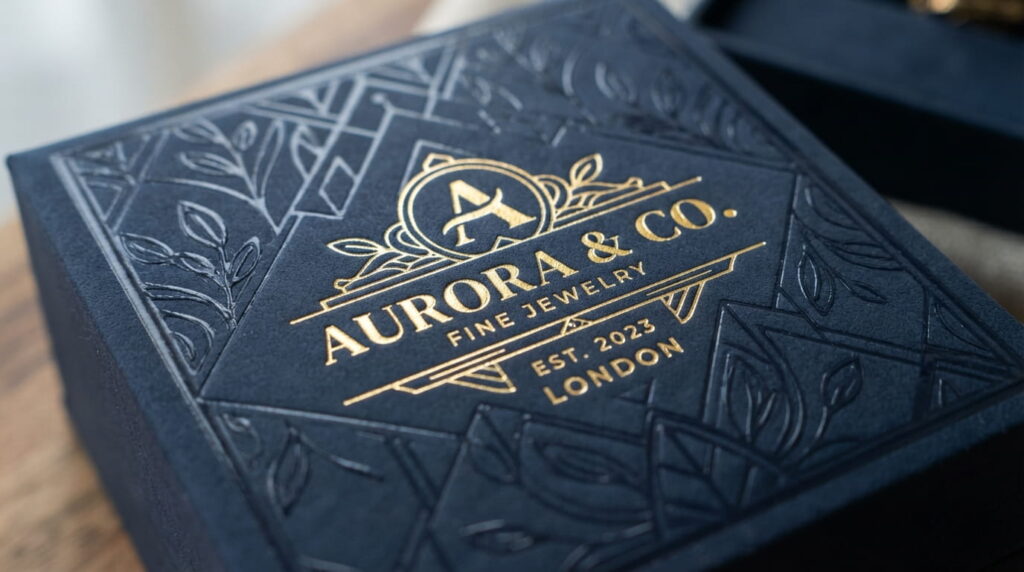
Rigid or magnetic-closure gift boxes, among the most popular types of rigid boxes, use thicker board for a premium, non-bendable feel. They suit jewelry, high-end skincare, luxury gifts, and any product where the unboxing itself is part of the experience.
Die-cut window boxes, display boxes, pillow boxes, and gable boxes serve more specialized needs. Windows showcase the product, display boxes support counter merchandising, and pillow or gable styles work for gifts, events, or party favors.
Complementary options such as custom mylar bags or pouches add moisture protection for foods, teas, coffees, and similar products.
A simple way to decide: if the box must survive shipping and create a branded reveal, start with custom mailer or shipping boxes. If the product sits on a shelf or needs a refined retail look, choose folding cartons or rigid boxes. Many growing brands use both—an outer custom shipping box plus an inner printed product box.
Materials, Printing, and Finishing Options Explained
Material choice balances protection, print quality, cost, and brand values.
- SBS (solid bleached sulfate) cardstock in 12–24 pt thickness offers a smooth surface for high-resolution printing and works well for cosmetics, food cartons, and retail boxes.
- Kraft paperboard provides a natural, eco-friendly look that appeals to organic, bakery, and sustainability-focused brands. It is biodegradable and recyclable.
- Corrugated board (E-flute for lighter items, B-flute for more strength) delivers the durability needed for custom shipping boxes and mailers.
- Rigid board creates the substantial feel of luxury gift packaging.
Printing methods should match order size and quality needs. Digital printing suits short runs and fast turnarounds with good color accuracy. Offset lithography delivers superior color matching and sharpness for larger volumes. Flexographic printing is efficient for bulk corrugated work.
Finishes elevate perceived value without always requiring high cost: matte, gloss, or soft-touch lamination; spot UV for logo emphasis; foil stamping in gold, silver, or holographic; embossing or debossing; clear PVC windows; and custom foam or cardboard inserts for product security and presentation.
Select materials and finishes that align with both product requirements (protection first) and brand personality. A clean minimalist brand often benefits from kraft or soft-touch finishes, while a bold lifestyle brand may lean into full-color printing and foil accents.
How to Design Effective Custom Printed Boxes
Effective design starts with accurate dielines and 3D mockups so you can check proportions, bleed, and fold lines before production. Free design support from a manufacturer removes a major barrier for growing teams.
Keep branding consistent with your website and other materials. Place the logo and key message on multiple panels so they remain visible whether the box is closed or open. Use the interior of the lid or flaps for a short welcome message, brand promise, or call to action—this is the moment of highest attention during unboxing.
Add practical elements that drive results: a QR code linking to a how-to video, review request, or reorder page; an insert with care instructions or a discount for the next purchase; and clear recycling guidance. Right-size the box to the product. Excess space increases filler needs, shipping costs, and the risk of product movement.
Common early-stage mistakes include over-designing (too many colors or effects that raise cost unnecessarily), ignoring carrier size and weight rules, and skipping proper proof approval. A practical growth framework works well: begin with simple one- or two-panel branding on standard sizes for test orders, then expand to full multi-panel designs, interior messaging, and inserts as monthly volume becomes predictable.
Cost Factors, MOQs, and Ordering Smart for Growing Brands
Price is driven by quantity, material thickness and type, print coverage, number of finishes, box size complexity, and shipping. Low minimum order quantities matter enormously for growing brands. Starting at just 100 boxes lets you test a new product line, launch a limited edition, or validate packaging without committing to large inventory or storage costs.
Watch for hidden fees. Some suppliers add die and plate charges that can significantly raise the first-order cost. Transparent manufacturers absorb these and provide clear quotes. Free standard shipping across the United States and Canada further improves the unit economics.
A smart approach for most growing brands is to order smaller quantities with digital printing while testing, then move to higher volumes and offset printing once the design and demand are proven. Standardizing a few core sizes across SKUs also reduces complexity and cost as you scale. Calculate the true cost of packaging by including the expense of damaged returns and the opportunity cost of weak brand impression. In many cases, well-designed custom boxes pay for themselves through fewer returns and stronger customer loyalty.
The Step-by-Step Process to Order Custom Packaging Boxes
A straightforward process removes friction:
- Submit your project details—box dimensions, preferred style and material, quantity, and any special requirements—via an online form or by speaking with a packaging specialist.
- Review complimentary 2D dielines and 3D digital mockups. Approve only after confirming artwork placement, text legibility, and structural details.
- Once approved, the order moves into production: printing, laminating or finishing, die-cutting, and quality inspection.
- Completed boxes are flat-packed and shipped with free standard delivery in the US and Canada.
Prepare accurate product dimensions (including any protective padding needs) and high-resolution artwork files before requesting a quote. Most manufacturers provide clear timelines so you can plan around product launches or seasonal peaks. Production begins only after your final proof approval, giving you control over the outcome.
Sustainability and Future-Proofing Your Packaging
Modern customers notice packaging choices. Recyclable kraft board, FSC-certified stocks, and biodegradable materials printed with non-toxic inks allow growing brands to demonstrate environmental responsibility without sacrificing quality or appearance.
Right-sizing boxes reduces material use and shipping emissions. Clear recycling instructions printed on the box help customers dispose of packaging correctly and reinforce your brand values. These choices support both customer preference and long-term brand positioning as regulations and consumer expectations continue to evolve.
Practical Tips and Common Pitfalls for Growing Brands
Before ordering, gather exact product dimensions with a small tolerance for protective materials, confirm shipping methods and carrier constraints, collect current brand guidelines, estimate near-term monthly volume, and define any sustainability priorities.
Real-world patterns show that brands that switch from generic boxes to properly engineered custom shipping boxes often see meaningful drops in damage rates. Those that invest in thoughtful interior messaging and inserts frequently report higher engagement and social shares.
Avoid these common pitfalls: ordering far more volume than you can use before design or product changes; neglecting inserts for fragile items; creating inconsistent branding across different box sizes; and skipping the digital proof stage. Start simple, measure results (damage rates, customer feedback, social mentions), and iterate.
Frequently Asked Questions
What is the minimum order quantity for custom packaging boxes?
Many manufacturers, including those focused on growing brands, start at 100 boxes. This supports testing and small runs without large inventory commitments.
Are there die or plate setup fees?
Transparent suppliers absorb these costs so the quoted price is the final price with no hidden charges.
Do you offer free design support and proofs?
Yes. Reputable partners provide 2D dielines and 3D mockups at no extra cost and begin production only after your approval.
What materials work best for shipping versus retail?
Corrugated board is preferred for custom shipping and mailer boxes. SBS cardstock or kraft works well for retail folding cartons. Rigid board suits premium gift experiences.
Are the boxes eco-friendly?
Options include 100% recyclable kraft, FSC-certified materials, and biodegradable stocks printed with non-toxic inks.
How long does the process take?
Timelines vary by complexity and volume, but clear communication and flexible lead times help meet launch deadlines. Free standard shipping is typically available across the US and Canada.
Can I order different styles or sizes together?
Most manufacturers can handle mixed styles within reasonable parameters; discuss your full needs during the quote stage.
Ready to Choose Packaging That Grows With Your Brand
Custom packaging boxes, custom printed boxes, and custom shipping boxes are no longer reserved for large enterprises. Growing brands can now access high-quality options with low minimums, professional design support, and transparent pricing. The result is better product protection, stronger brand presence, lower long-term costs, and more memorable customer experiences.
Start by defining your product needs, preferred style, and near-term volume. Then request accurate dielines, a 3D mockup, and a clear quote. When packaging is designed to match both your product and your growth stage, it stops being a necessary expense and becomes a lasting competitive advantage.
Partner with a manufacturer that understands the realities of scaling brands—low minimum order quantities starting at 100 boxes, no hidden die or plate charges, complimentary design support, and free standard shipping across the United States. That combination removes the traditional barriers and lets you focus on building the brand.